


Karen is out and a millennial name has become the internet’s new insult
A name many grew up with is being reshaped by the internet, raising bigger questions about labels, power and how language evolves.
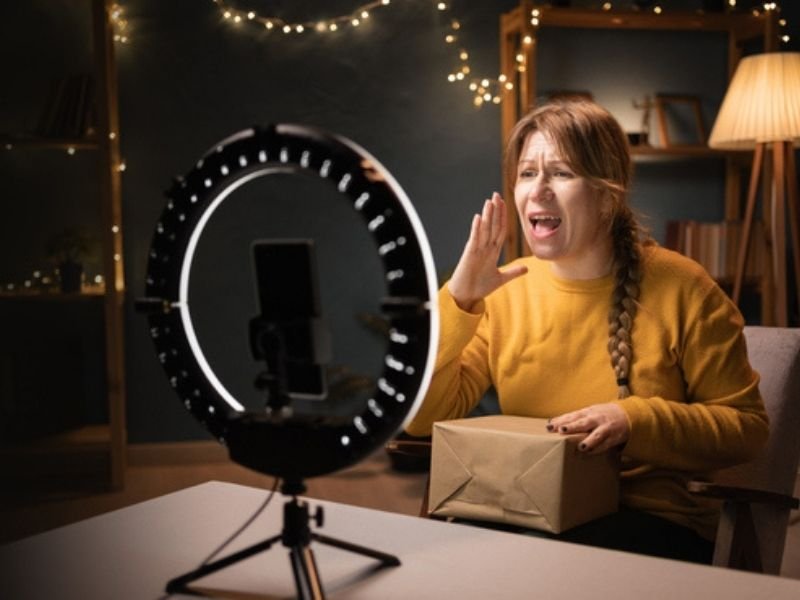
Step aside, Karen, someone else wants to see the manager…
The question of a successor to Karen did not appear overnight. Back in 2020, users on Reddit began debating what the millennial equivalent of Karen might be. Karen had already become a widely used insult aimed at older women perceived to be overly entitled, interfering or quick to complain. As generational focus shifted, it seemed inevitable that a new name would eventually take its place.
Over the next five years, the conversation resurfaced repeatedly across social media platforms. Various names were proposed, scrutinised and eventually discarded. Some people attempted to defend their own names or suggest alternatives, hoping to divert attention elsewhere.
ALSO READ: South African jobs that do not require experience or qualifications
How did one name rise above all the others?
By the mid-2020s, a clear favourite had emerged. According to Independent UK, the internet has seemingly settled on Jessica as the modern equivalent of Karen.
For many people named Jessica, the shift feels uncomfortably familiar. Karen was once a neutral and common name before it became loaded with negative connotations almost overnight. The same pattern now appears to be repeating itself, with millennials experiencing their own version of that cultural reckoning.
Why has the term Karen been so controversial?
From its early days, Karen evolved rapidly from a specific critique into a broad insult. It was soon used to shame women for complaining, being labelled demanding or speaking up in everyday situations. Rather than challenging genuinely unreasonable behaviour, the term often functioned as a way to discourage women from asserting themselves at all.
This shift has not gone unnoticed. In June last year, a judge overseeing an employment tribunal described calling someone a Karen as “borderline racist, sexist and ageist”.
How was the term Karen chosen in the first place?
The selection of Karen as a stereotype was far from accidental. During the 1960s, Karen ranked among the most popular girls’ names in both the UK and the US. By the time Karen memes began circulating widely in the late 2010s, women with that name were typically in their late fifties or sixties. The name became a convenient shorthand for a specific age group.
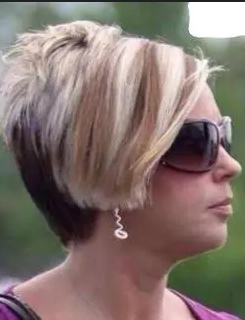
Karen also evoked a vivid image. The stereotype suggested a middle-aged woman with a particular hairstyle and a sense of entitlement shaped by experience and expectation. It was an instantly recognisable caricature, which made the meme easy to spread and adapt.
ALSO READ: Back-to-school shock: Why educating a child now costs more than ever
Why does Jessica fit the same pattern?
The logic behind Jessica mirrors that of Karen. Popularity plays a central role. In the United States, Jessica and Jennifer dominated baby name charts throughout the 1980s. Jennifer held the top spot in the early part of the decade, before Jessica overtook it and remained popular into the early 1990s.
Jessica’s sustained popularity means it is strongly associated with millennials. Like Karen before it, the name is tied to a particular generation, making it useful as an age-specific label. As with the earlier stereotype, the name itself becomes a shorthand for perceived behaviours rather than an accurate reflection of individuals.
Is popularity enough to turn a name into an insult?
History suggests that popularity alone is not sufficient. Other names that were equally common in earlier decades never became cultural shorthand. There was simply something about Karen that lent itself to caricature. It was easy to imagine the scenario: a customer convinced that procedures had not been followed properly, insisting on further action.
The same logic is now being applied to Jessica. Online commentators have suggested that the name naturally fits certain unflattering traits. In one widely shared social media video, a creator argued that Jennifer sounded friendly, while Jessica felt more confrontational. Apologising to people with the name, the creator concluded that Jessica was the most likely successor.
What behaviour is now being associated with this new label?
So far, there is no fixed definition of what constitutes a so-called Jessica. The existing ideas remain loosely defined and often contradictory. Unlike Karen, which eventually developed a fairly standard set of associations, Jessica is still in the early stages of becoming a stereotype. Its meaning continues to shift depending on who is using it and in what context.
How have people named Jessica responded?
Many real-life Jessicas have pushed back strongly. TikTok users with the name have posted videos explaining why they do not fit the stereotype, often stressing their discomfort with confrontation or their reluctance to complain. Others have defended the name by highlighting positive personal experiences.
ALSO READ: Study: South Africa named world’s biggest overthinker

HOW TO LISTEN TO EAST COAST RADIO
1. Listen to East Coast Radio on the FM (frequency modulation) spectrum between 94 and 95 FM on your radio.
2. Listen live to ECR by clicking here or download the ECR App (iOS/Android).
3. Listen to East Coast Radio on the DStv audio bouquet, channel 836.
4. Switch to the audio bouquet on your Openview decoder and browse to channel 606.
5. Listen to us on Amazon Alexa.
Follow us on social media:
Image courtesy of iStock