


Johannesburg to Durban via high-speed train? Yes, please!
A high-speed train between Johannesburg and Durban could soon transform travel across South Africa.
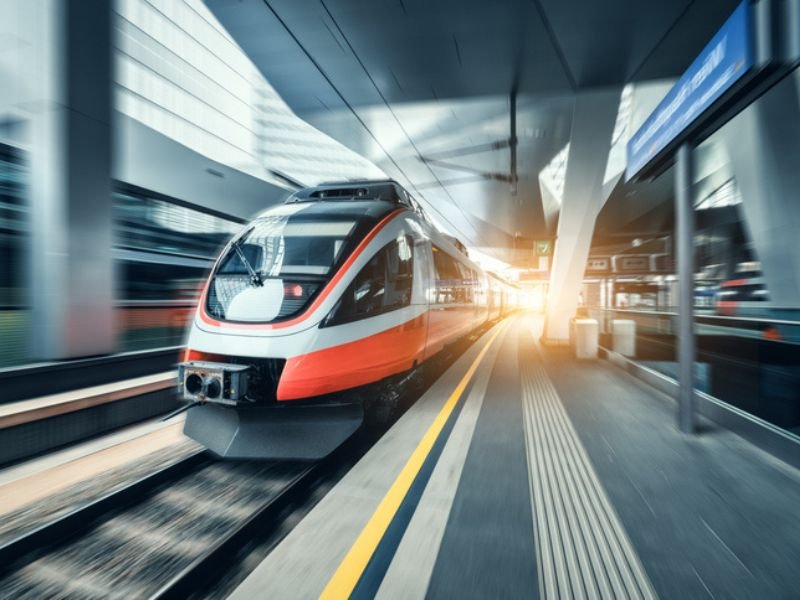
The Department of Transport (DoT) has announced a new plan to advance long-distance regional rapid transit in South Africa. Central to this is the concept of a high-speed railway line linking Johannesburg and Durban, capable of reaching speeds of 300 km/h.
Minister of Transport Barbara Creecy introduced a request for information (RFI) to invite private partners to share ideas and proposals for this ambitious project. The aim is to create a network of faster, safer and more efficient regional trains while opening the door to private-sector participation in rail development.
ALSO READ: Does KZN need an e-panic button app like Gauteng?
How will the regional rail network operate?
According to Moneyweb, the 120 km/h regional trains will run on existing infrastructure, connecting key cities such as Pretoria, Johannesburg, Polokwane, Musina, Mbombela and Durban. Plans also include new lines capable of running trains between 160 km/h and 200 km/h.
Creecy said the goal is to reduce travel time and costs, ease pressure on national roads and boost development in towns along the routes. However, the final funding estimate is still unknown as feasibility studies are ongoing.
When could construction begin?
The minister noted that it is too early to predict a timeline for development. Reflecting on her experience with the Gautrain, she explained that it took three years from the RFI process to financial closure and another seven years to complete construction. She emphasised the importance of starting groundwork now, stating that progress is impossible without initial action.
Why is private sector involvement vital?
Creecy clarified that while there are no plans to privatise rail, private partnerships are essential due to current fiscal constraints. Investment could take the form of concession or build-operate-transfer (BOT) models, where ownership would eventually return to the state.
ALSO READ: Listen: To buy or to rent in KZN? Stacey and J Sbu start property debate
What other projects are part of this initiative?
The RFI also includes four additional opportunities for private-sector involvement:
Smart ticketing for integrated travel across different transport modes
Upgrading PRASA train depots for improved reliability
Turning PRASA’s fibre optic network into a revenue-generating asset
Leasing and repurposing PRASA’s Blue and Yellow trains
How is PRASA’s recovery progressing?
By May 2025, PRASA had reopened 35 of its 40 passenger corridors and reported 77 million passenger journeys. To maintain this recovery, the agency requires further investment, which the RFI process could help attract. Creecy said the RFIs are not tenders but serve to gather insights and ideas to guide future proposals.
What are the long-term goals for passenger rail?
The DoT aims to increase passenger journeys to 600 million a year by 2030. Private participation is seen as crucial to achieving this target and building a modern transport system that enhances competitiveness and supports economic growth.
The DoT has signed an agreement with the Development Bank of Southern Africa (DBSA) and the National Treasury, appointing DBSA as the implementing agent for the private-sector participation unit. The first phase of RFIs for the Transnet freight sector closed in May 2025 with 162 responses, including submissions from 12 countries.
This growing collaboration between public and private sectors marks a significant step toward a faster, more connected South Africa, linking major cities like Johannesburg and Durban in a new era of modern rail travel.
ALSO READ: A South African pizza favourite is back with a relaunch that’s bound to fire up your taste buds

HOW TO LISTEN TO EAST COAST RADIO
1. Listen to East Coast Radio on the FM (frequency modulation) spectrum between 94 and 95 FM on your radio.
2. Listen live to ECR by clicking here or download the ECR App (iOS/Android).
3. Listen to East Coast Radio on the DStv audio bouquet, channel 836.
4. Switch to the audio bouquet on your Openview decoder and browse to channel 606.
5. Listen to us on Amazon Alexa.
Follow us on social media:
Image courtesy of iStock
Have a similar story or something unique to share? Email us at [email protected], we would love to hear from you!