


1996 vs 2025: What R100 could buy in South Africa then and now
Remember when R100 could stretch so far? We're taking a look at how much it buys today compared to 1996.
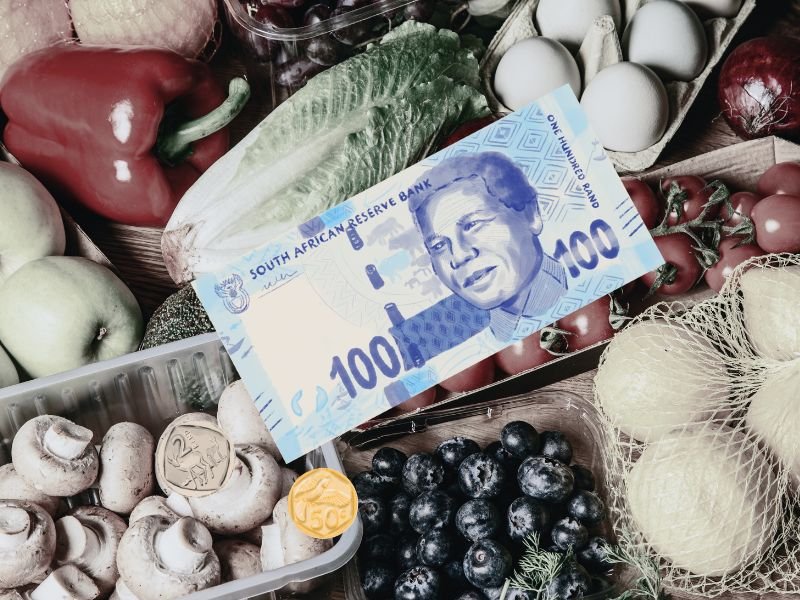
South Africa’s story of inflation over the last three decades has been shaped by a mix of global shocks, local pressures and ongoing challenges within a number of sectors
Inflation has climbed by almost 371% since 1996, meaning that money today buys significantly less than it did 29 years ago.
Inflation is influenced by a range of economic forces. Over the years, several global events have added strain to South Africa’s economy and contributed to rising costs for consumers. Two major international crises stand out for their long-lasting impact on prices.
ALSO READ: From Rands to ruin: How SA food prices have skyrocketed
What global events contributed to rising inflation?
The COVID-19 pandemic was the first major shock, disrupting global supply chains and leading to shortages across goods and services. Transport routes slowed or shut down, factories closed, and the ripple effects sent prices climbing worldwide.
Then, the 2022 Russian invasion of Ukraine intensified international pressure on food and fuel costs. With two key exporters affected, global commodity prices surged. This had a cascading effect, increasing costs in essential sectors and placing greater financial strain on South African households already navigating rising expenses.
While these crises led to steep increases, food price inflation in South Africa has recently begun to ease. According to BusinessTech, consumer food price inflation slowed to 3.9% in October 2025, down from 4.4% in previous months. This deceleration was primarily driven by lower price increases in fruit, nuts, vegetables, meat, sugar, confectionery and desserts.
However, challenges remain. Foot-and-mouth disease continues to affect the agricultural sector, placing pressure on farmers and prompting ongoing vaccination efforts.
How is the value of R100 calculated across time?
Statistics South Africa tracks consumer price inflation over extended periods. The consumer price index (CPI) measures how prices change for a basket of goods and services commonly purchased by households. Using CPI data from 1996 and 2025, it's possible to calculate how much R100 from the past would be worth today.
To determine this, R100 is multiplied by the CPI of 2025 and then divided by the CPI of 1996. This calculation shows that R100 in 1996 holds the same buying power as roughly R470.45 in 2025. This reflects an inflation rate of 370.5% over 29 years or an average annual rate of 5.48%.
Although general inflation paints one picture, the cost of essential items often paints a different one. Unfortunately, food prices have outpaced inflation in many categories, further eroding purchasing power for many South Africans.
ALSO READ: Flashback Friday: How much did life cost in the ‘80s?
Which everyday items have risen faster than inflation?
Certain items have surged far beyond the general rate of inflation. Eggs, for example, have risen by a staggering 952% since 1996. White bread has increased by 787% and milk by 624%. These increases underscore the disproportionate burden placed on households, especially when food often accounts for a large share of monthly expenses.
What did R100 buy in 1996 compared to 2025?
A comparison using data from Statistics South Africa and average prices from four major retailers (Woolworths, Checkers, Pick n Pay and Spar) demonstrates how sharply purchasing power has declined.
In 1996, a basket of selected everyday goods cost R101.91. It was possible to purchase nearly the entire list with just R100. In contrast, the same or similar basket costs an average of R775.88 in 2025. When compared with the inflation-adjusted value of R470.45, it becomes clear that the real buying power of R100 has deteriorated significantly over time.
Take a look at the price comparison below:
White bread (700g): R2.45 in 1996, R18.99 in 2025
2-litre milk: R5.21 in 1996, R32.99 in 2025
Lamb chops (per kg): R21.18 in 1996, R219.99 in 2025
Chicken fillet (per kg): R10.75 in 1996, R84.99 in 2025
Apples (per kg): R4.37 in 1996, R32.99 in 2025
Coca-Cola (2L): R5.04 in 1996, R26.99 in 2025
Eggs (6-pack): R2.28 in 1996, R23.99 in 2025
Toothpaste (100ml): R4.38 in 1996, R24.99 in 2025
Toilet paper (4-pack): R7.14 in 1996, R34.99 in 2025
2kg white rice: R6.29 in 1996, R42.99 in 2025
Kellogg’s Cornflakes (500g): R8.44 in 1996, R56.99 in 2025
Cheese (per kg): R24.38 in 1996, R174.99 in 2025
ALSO READ: Coffee lovers in South Africa: Your mornings are officially in trouble

HOW TO LISTEN TO EAST COAST RADIO
1. Listen to East Coast Radio on the FM (frequency modulation) spectrum between 94 and 95 FM on your radio.
2. Listen live to ECR by clicking here or download the ECR App (iOS/Android).
3. Listen to East Coast Radio on the DStv audio bouquet, channel 836.
4. Switch to the audio bouquet on your Openview decoder and browse to channel 606.
5. Listen to us on Amazon Alexa.
Follow us on social media:
Have a similar story or something unique to share? Email us at [email protected], we would love to hear from you!
Images courtesy of iStock