


A Royal Mess
He’s always in the news these days, but seldom for the right reasons. Terence Pillay looks at the Kwa Zulu Natal monarch King Goodwill Zwelithini and his controversial reign.
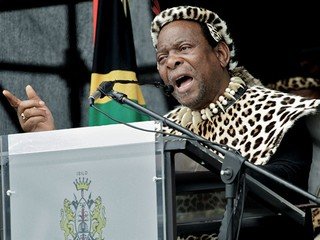
In the wake of the result of the investigation into the upgrading of the president’s homestead in Nkandla, it seems taxpayers have also been footing the lavish lifestyle of yet another Zululand political figure, King Goodwill Zwelithini.
The Kwa Zulu-Natal royal family’s unexplained “extravagance” has raised the ire of parliamentarians and king is widely criticised for unduly influencing the votes of millions of people in the province.
I find it totally unacceptable that one person through a birthright, for example, a king, should control so many people’s lives through whatever form of influence. And it’s unacceptable in a modern, democratic, secular society as ours is, even worse in a post-colonial revolutionary society, to hang on to these vestiges like royalty – even if it’s tribal royalty.
The social movements like the labour movement are based on the fact that people shouldn’t be subjects of a king or a lord or a landowner who has a birthright to that land. And so I ask, just by birthright, should this person gets a huge track of land and all these minions who must bow and kowtow to him? I mean, this is not a democracy. And we certainly don’t live in a monarchy!
Even in the UK, which is a monarchy in a manner of speaking, those are just figurehead positions and not the government. And King Zwelithini is not the government either, but his role has been politicised, which makes his undue influence over millions of people unacceptable.
So for example, if I was an individual who happens to be a Zulu person by birth in terms of my traditions and culture, I should not have to fear repercussions from some kind of traditional leadership if I don’t vote a certain way. I should be able to make my own decisions and ones that are good for me as an individual. And decisions that will best suit me and my family, without fear or favour.
The fact of the matter is: the reason the king gets away with so much is because he controls the votes of some 3-million people and to sanction him in any way or form will mean losing those votes. And politicians are constantly calling for referendums in this country and so, in my opinion, if you’re going to have a referendum, which I don’t really support because I don’t believe in majority opinion being the right opinion, but perhaps that should be the kind of referendum we should have – should we not dismantle the traditional leadership?
And if you ask people like Steve Biko and Robert Sobukwe (if they were still alive) whether they should be subjects of some king, I’m pretty sure the answer would be “no”, for the simple reason that it’s counter revolutionary.
If you’re going to have a community leader, for one, it should be someone the people respect and not necessarily someone who’s born into that position. And if it’s going to be somebody that’s born into that position, for example a Prince William and the like, surely it is their responsibility to provide moral leadership and to be exemplary citizens, who support the vision of the kind of society we want to live in.
And if they can’t do that, they certainly shouldn’t be supported by taxpayer’s money.
So if you look at Zwelithini, he’s got this Ingonyama Trust, tracks of land, huge amounts of money, a large number cattle and so on, so he’s fairly wealthy in his own right but now he’s supported by the state in addition with a stipend, which is outrageous.
But then you look at this tribe in the Northwest who got mineral rights because they discovered their land was on top of these huge platinum deposits and they became very wealthy as a result of this very well-resourced land. And as a result of the wealth that the accumulated, they invested hugely in their community; they built the most incredible schools, they built a stadium, they have invested in their children’s education and they support their community through various projects – they share the wealth.
This is based on the same system we have here in KZN – the traditional leader system, but how has Zwelithini used the wealth of the Zulu nation in terms of the land and everything he has access to, to actually improve people’s lives? Or does he just stand there waiting for government to provide?
And in addition to waiting for government to provide for his people, the majority of whom are living in abject poverty in under-developed rural areas, he is also demanding that government give him some R44-million a year – to do what? To live in the lap of luxury? And that’s just R44-million in cash that they give him the bank and say, “live your life”. I’d like to know if public works looks after his properties, is the state providing his security and so on. R44-million is not going to cover all that.
In a post-colonial, modern, democratic society as we claim to be isn’t it very strange that we cling to this idea of a birthright; that you should be born into power. Imagine we just passed on power to people because they were the son of a son of a son. Imagine now, under the Nationalist government if succession was simply by birth, there was no election and power was just passed on. Verwoerd’s son would have become the next president, and his son the next one; it would have been outrageous!
So unless we start to critically engage with the system, it will be another person who will have the same approach and the same mentality. It will be another king, in all likelihood the king’s grandson who will eventually become king. And we need ask if this is the most appropriate thing we need for our country and the future of our society? Is this the kind of society we want to be living in three hundred years from now?
You can email Terence Pillay at [email protected] or follow him on Twitter: @terencepillay1, and tweet him your thoughts.