


OUTA raises concerns over Eskom solar registration process
OUTA has urged Eskom to clarify solar registration rules, saying inconsistent and duplicated requirements from municipalities are causing confusion. According to the organisation, many households aren’t sure what is expected of them before the deadline.
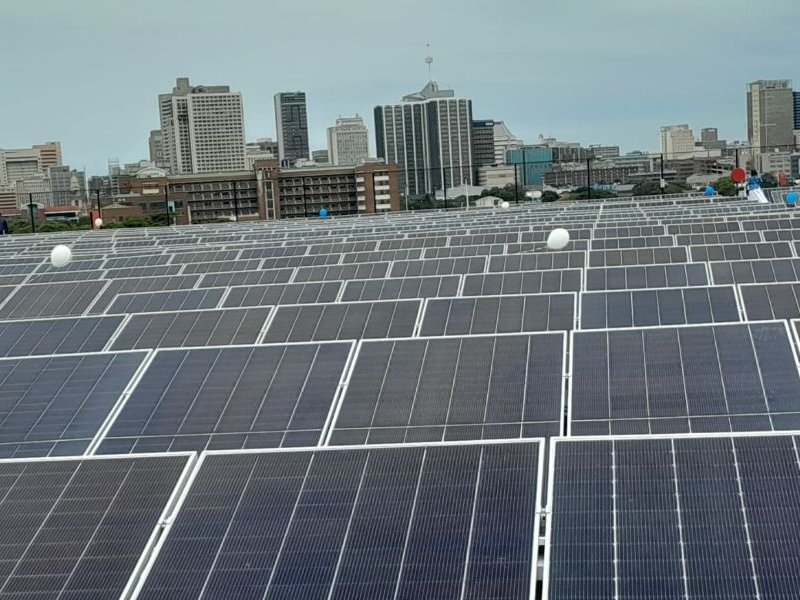
The Organisation Undoing Tax Abuse is asking Eskom to provide clarity on its solar registration process.
OUTA says inconsistent regulations have left many households uncertain about whether they're required to register their solar systems.
The organisation claims Eskom and some municipalities are introducing duplicate requirements that go beyond existing law.
"Eskom’s 31 March 2026 deadline for registering residential solar PV and battery energy storage (BES) systems is looming, with minimal uptake of their demand to register by customers. Not because households are unwilling to comply, but because the rules are unclear, inconsistent, and in some cases, unlawful," says Wayne Duvenage, CEO of OUTA.
"The Organisation Undoing Tax Abuse (OUTA) has raised serious concerns about parallel compliance processes introduced by Eskom Distribution and certain municipal electricity distributors. These processes apply to systems installed behind the electricity meter on private property, despite existing national legislation, regulations, and mandatory safety and technical standards that already govern safety and technical compliance.
“Households are being asked to comply twice for the same system. That is not regulation. That is overreach."
Deadline approaches as registration debate intensifies
If you're connected to Eskom's electricity network, the deadline to register your solar system is the end of March.
Those who are off the grid aren't required to register and must instead show proof that their systems run independently.
OUTA’s Wayne Duvenage says less than 15% of households with solar panels have completed the registrations process.
"A valid Certificate of Compliance is lawful proof that your system meets all required safety and technical standards. Eskom or municipal registration processes fall outside national legal requirements.
"It is further OUTA’s position that if a system does not feed electricity back into the grid, or the homeowner does not want to be compensated for exported energy, and the system has a valid Certificate of Compliance, the homeowner may choose to forgo Eskom or municipal registration processes that fall outside national legal requirements.
“Where a system both imports from and exports electricity into the grid, and the homeowner wants to be compensated for exported energy, registration with the electricity provider is required.
“If a law-abiding homeowner with a valid Certificate of Compliance receives formal notice of disconnection, OUTA recommends that the action should be challenged. Legal advice should be sought to oppose any enforcement that is not supported by law."
What did Eskom say about the process?
Eskom said that it is making it easier for residential and business customers with solar PV or other Small Scale Embedded Generation (SSEG) systems to meet the legal requirement to register them with the electricity service provider.
“Eskom is working with key national organisations, including South African Bureau of Standards (SABS), Department of Employment and Labour (DoEL), Association of Municipal Electricity Utilities – Southern Africa (AMEU), South African Photovoltaic Industry Association (SAPVIA), Electrical Conformance Board (ECB), and Electrical Contractors Association of South Africa (ECA), to simplify and harmonise SSEG rules across the country.”
Who needs to register?
- SSEG systems above 100 kVA, that are typically large businesses, are legally required to be registered directly with NERSA
- SSEG systems below 100 kVA, covering households and small businesses, must be registered with Eskom or the local electricity provider with Eskom providing R10,000 support for customers with systems under 50kVA
- Fully off grid systems do not need to register if they operate independently from Eskom’s supply
Documents customers need to submit
- CoC for electrical wiring
- NRS097-2-1 inverter type test certificate
- SSEG commissioning test report (12-month grace period allowed after registration)
Find us on social media
Follow the ECR Newswatch WhatsApp channel here
We are also on Facebook and X (formerly Twitter)
MORE ON ECR
