


Municipal debt emerges as biggest threat to Eskom's financial sustainability
Eskom’s improved financial performance is being undermined by mounting municipal debt, with municipalities owing the power utility almost R120 billion in electricity arrears. Electricity Minister Kgosientso Ramokgopa says the debt poses a serious structural threat to Eskom’s financial sustainability.
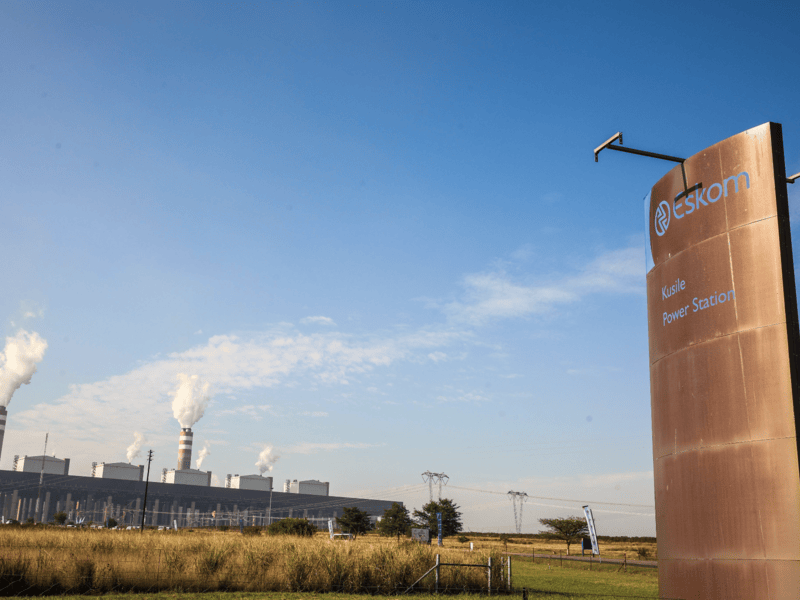
Eskom’s improved financial performance is being overshadowed by a growing municipal debt crisis, with electricity arrears owed by municipalities reaching almost R120 billion.
Electricity Minister Kgosientso Ramokgopa has said that municipal debt is now one of the most serious structural threats to Eskom’s ability to remain financially sustainable, despite the utility recording its second consecutive annual profit.
Eskom’s integrated report shows municipal arrears increased by 17.9% to R111.6 billion at the end of March 2026, before rising further to R119.9 billion by June. Municipalities account for approximately 44% of Eskom’s electricity sales, making payment discipline in the sector critical to the utility’s cash flow.
Ramokgopa said the problem cannot simply be viewed as an Eskom debt-collection issue.
"Municipal area debt remains one of the most serious structural threats to Eskom's financial sustainability. At 31st March 2026, municipal area debt stood at R111.6 billion, and it has since increased to approximately R119 billion by June 2026. This is not simply an Eskom collection problem. It is a systemic challenge for the electricity industry and for local government."
The warning comes as Eskom reports a significant improvement in its financial position.
The utility recorded R106 billion in EBITDA, R39.4 billion in profit before tax and R124.9 billion in cash and cash equivalents at the end of March.
Eskom also reported a profit after tax of about R30.3 billion, more than double the R14 billion recorded in the previous year. However, Eskom says rising municipal arrears and declining electricity sales remain key risks to sustaining the recovery.
DEBT THREATENS ESKOM'S TURNAROUND
Ramokgopa said government’s debt-relief intervention gave Eskom the breathing room required to stabilise its operations, meet its obligations and invest in maintenance.
But he stresses that the support was designed as a bridge towards financial independence rather than a permanent solution.
“The purpose of that support was never to create permanent dependence on the fiscus. It was to create a bridge towards a utility that can finance its operations and investments through sustainable revenues, disciplined expenditure, and credible cash flows.”
Eskom itself has warned that the municipal debt crisis could undermine the gains made through the government’s debt-relief programme. Its integrated report says unresolved arrears could ultimately jeopardise the legal separation of Eskom’s Distribution business and prolong the utility’s reliance on government support.
The utility estimates that, without decisive intervention, municipal arrears could rise to approximately R358 billion by the 2031 financial year.
GOVERNMENT STEPS UP PRESSURE ON MUNICIPALITIES
There have already been moves to strengthen payment discipline.
Eskom said National Treasury temporarily withheld quarterly equitable-share transfers from 69 non-compliant municipalities in July 2026, pending compliance with conditions that include payment agreements with creditors such as Eskom where applicable.
Eskom has also moved towards distribution agency agreements, which are intended to provide greater protection for electricity revenue and improve payment discipline in municipalities that are struggling to meet their obligations.
Three municipalities — Emfuleni, Maluti-a-Phofung and Merafong — had distribution agency agreements in place at the end of the financial year, according to Eskom.
Ramokgopa said a combination of measures will be required to address the crisis.
These include stronger payment enforcement, prepaid electricity models, distribution reforms, improved revenue collection and greater coordination between national government, provinces, municipalities, National Treasury, regulators and Eskom.
“Resolving municipal debt requires coordinated action by government, national treasury, provinces, municipalities, regulators, and ESKOM.”
JOHANNESBURG DEBT RESOLUTION PROVIDES AN EXAMPLE
The municipal debt crisis has already resulted in high-profile interventions.
The City of Johannesburg and City Power recently settled more than R5.25 billion owed to Eskom following an intervention and mediation process involving the city, City Power and Eskom. The settlement brought an end to a long-running dispute and allowed Eskom to withdraw legal action relating to the arrears.
Ramokgopa has previously described resolving Johannesburg’s electricity debt as particularly important because of the size and economic importance of the city.
The settlement, however, does not resolve the broader municipal debt problem facing Eskom.
AFFORDABILITY ALSO REMAINS A CONCERN
Ramokgopa says fixing municipal debt must happen alongside efforts to make electricity affordable.
Households are under financial pressure, while municipalities are struggling with their own fiscal constraints. At the same time, Eskom needs sufficient revenue to maintain its ageing infrastructure, expand the electricity grid and meet its financial obligations.
The minister says customers cannot be expected to absorb the cost of inefficiencies, electricity theft and non-payment.
"Customers cannot be expected to carry the cost of avoidable inefficiencies, electricity theft, non-payment, or delayed reform."
He said the review of the electricity pricing framework must therefore balance Eskom’s financial sustainability with affordability.
"The revision of the electricity pricing framework must therefore support both sustainability and affordability."
FINANCIAL RECOVERY CANNOT BE TAKEN FOR GRANTED
The municipal debt crisis comes at a critical point in Eskom’s turnaround.
The utility has substantially improved generation performance, with its energy availability factor rising to 65.16% from 60.06% in the previous financial year. South Africa also reached 365 consecutive days without load shedding in March 2026.
But Eskom said declining sales, uncertainty around future tariffs, debt-servicing obligations and municipal arrears remain significant structural pressures.
The utility’s integrated report describes municipal arrears as its single greatest threat to financial sustainability and says the problem is also the biggest obstacle to the legal separation of its Distribution business.
Ramokgopa says the next phase of Eskom’s turnaround must therefore focus on making the recovery durable rather than simply celebrating the latest financial results.
"We must not declare the turnaround complete. The next task is to ensure that Eskom's recovery becomes durable, self-sustaining, and resilient in a changing electricity market."
Find us on social media
Follow the ECR Newswatch WhatsApp channel here
We are also on Facebook and X (formerly Twitter)
